5 things to know before trading meme coins without losing your whole portfolio
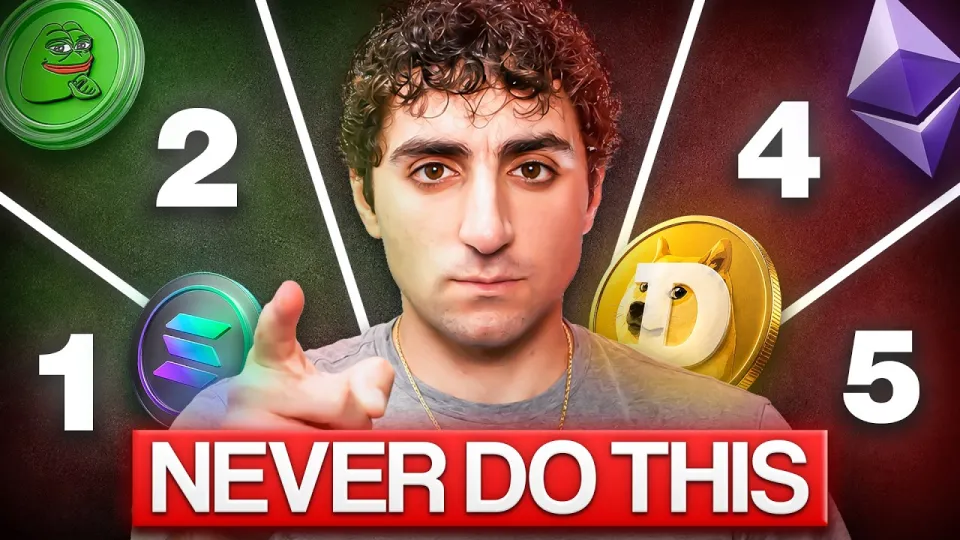
Video: 5 Things I Wish I Knew Before Trading Memecoins (Learn From My Mistakes)
Want articles like this for your own video to promote it on YouTube and Google? Order them through the Telegram bot @sat_sit_bot. The bot writes and publishes the articles itself (with your YouTube video embedded) on popular topical websites (no ads). Your first 50 articles are free.
· based on the channel rasmr
Key takeaways
- Meme coins are narrative-driven tokens with no cash flow, so price is set almost entirely by attention and liquidity.
- Most beginner losses come from oversized positions and boredom trades, not from picking the wrong ticker.
- Consolidation before a breakout is the zone experienced traders watch; chasing a green candle is the most expensive habit.
- Exit rules written before entry matter more than entry price, because meme coin liquidity disappears faster than it appears.
- Patience is the real edge: waiting for setups beats trading every day of the week.
A meme coin is a crypto token whose price depends on attention, community and liquidity rather than on revenue or product fundamentals, which is why trading it is a game of risk control first and prediction second. Before you buy your first one, decide how much you can lose entirely, write your exit rules, and only then look at charts. The practical side of that process — including where to place trades — starts with a registration on the FOMO trading platform, the venue referenced by the rasmr channel in its breakdown of beginner mistakes.
The five rules below come from the same idea the rasmr video builds on: most losses in this market are self-inflicted and repeatable, so they can be avoided with a checklist rather than with better intuition.
Why meme coin prices behave nothing like Bitcoin or Ethereum
Meme coins have no earnings, no treasury policy and often no roadmap that survives contact with the market, so their valuation is a pure function of narrative strength and order book depth. Bitcoin has a decade of institutional flows behind it; a token launched last week has a few thousand holders and a liquidity pool that can be drained by a single large seller. That difference changes everything about how you size a trade.
Three structural features define the asset class:
- Thin liquidity. A pool with a few hundred thousand dollars of depth means a $10,000 sell can move price several percent. Your paper profit is not real until you exit into someone else's buy order.
- Narrative half-life measured in days. Attention rotates fast. A token can trend for 48 hours and then bleed for three weeks while the community moves to the next ticker.
- Holder concentration. When the top ten wallets control a large share of supply, the chart is effectively a hostage to their decisions. Check the distribution before you check the chart.
Understanding these three points is what separates a trade from a lottery ticket, and it is the foundation for every rule that follows.
Rule 1 — Size positions so a total loss changes nothing in your life
The first thing to know before trading meme coins is that any single position must be small enough to go to zero without affecting your finances. Treat every entry as a lottery ticket you have already written off, because a meaningful share of these tokens do go to zero, and some do it within hours of listing.
A workable framework for a beginner:
- Cap total meme coin exposure at a small fixed percentage of your portfolio, decided in advance and never adjusted upward after a win.
- Split that budget into several positions instead of one, so a single rug or delisting does not end the experiment.
- Never fund a meme coin trade with borrowed money or with capital earmarked for anything else.
The viewer feedback under the rasmr video makes the same point from the other direction: traders describe losing an entire portfolio during a bear market simply because they were bored. Boredom is the most expensive position size of all.
Rule 2 — Wait for consolidation instead of chasing the green candle
Buying during consolidation, before the crowd notices, beats buying the vertical candle every time. The most common beginner question is whether to enter while price is flat or to wait for confirmation such as news, a listing, or a volume spike — and the honest answer is that both can work, but only if the entry is planned rather than reactive.
A practical way to handle it:
- Consolidation entry: buy a small starter position while price ranges, accepting that it may break downward and you will stop out.
- Confirmation entry: wait for a volume expansion and a higher low, then buy a smaller size at a worse price but with better odds.
- Never buy the top of a candle that has already doubled in an hour, because that is where late liquidity gets absorbed.
Whichever route you choose, define the invalidation level first. If price drops below the range low, the thesis is wrong and the position closes, regardless of how good the memes in the chat are.
Rule 3 — Plan the exit before you plan the entry
Exit discipline is what turns a lucky trade into a repeatable process, and it is the single skill most beginners skip. Meme coin liquidity vanishes faster than it appears, so the moment to decide how you will sell is before you buy, not during a drawdown.
A simple structure that works for most traders:
- Sell a portion — for example a third — once the position doubles, recovering the original stake.
- Sell another portion into strength on the way up, on a fixed schedule rather than on emotion.
- Keep a trailing stop on the remainder so a runner can still pay for the losers.
- Accept that you will never sell the exact top, and stop trying.
Without a written plan, the typical outcome is holding through a full round trip: the token goes up 300%, then back to your entry, and then below it while you wait for the old high.
Rule 4 — Read the token's plumbing before the chart
Contract and holder checks take ten minutes and eliminate a large share of avoidable losses. Before any entry, verify that the contract is not mintable at will, that trading is not paused or taxed at an absurd rate, and that the liquidity is locked or at least long-standing.
A quick pre-trade checklist:
- Holder distribution: a small number of wallets holding a large share of supply is a red flag, even if the chart looks perfect.
- Liquidity depth: compare pool size to the amount you intend to trade; if your order is a large fraction of the pool, you are the exit liquidity.
- Age and volume pattern: brand-new tokens with spiky volume and no organic holder growth are usually distribution events, not opportunities.
- Social footprint: real communities discuss losses as well as gains; paid shill channels do not.
This is also where most of the popular questions from newer traders come from — whether to trust a call, whether a token is 'early', whether a dip is a discount. In nearly every case the answer is in the contract and the holder list, not in the influencer's caption.
Rule 5 — Treat patience as the actual strategy
Patience is the edge in a market that rewards activity, because most meme coin trades are not worth taking. Sitting in stablecoins while nothing is setting up is a position, and it is usually a profitable one compared with forcing a trade out of boredom.
The mechanics of a patient approach:
- Set a small number of setups you actually understand and ignore everything outside them.
- Keep a written log of every trade with entry, exit and reason, so patterns in your own behavior become visible.
- Review the log weekly; the mistakes repeat far more predictably than the winners.
- Accept flat days. A month with three good trades beats a month with thirty average ones.
Traders who describe turning their results around after an early losing streak almost always describe the same shift: fewer trades, smaller size, written rules, and no revenge trading after a stop-out.
What the rasmr breakdown adds for beginners
The rasmr channel is unusual in this niche because it frames meme coin trading as risk management rather than as a hunt for the next hundred-x. The video's premise — five things the author wishes he had known before trading these tokens — maps directly onto the rules above: position sizing, patience, exit planning, due diligence on the contract, and the discipline to skip bad setups.
For a new trader, that framing is more valuable than any single ticker call. The channel's audience feedback repeats the same theme from the other side of the screen: people who started a month ago report having made all the classic mistakes already, and the ones who recover are those who change process rather than chase a bigger win. If you want to test these rules with real orders, you can start with a FOMO account via the rasmr referral link.
The bottom line
Meme coin trading rewards process over prediction: small positions, planned exits, verified contracts and the patience to do nothing most days. The tokens themselves are volatile and often worthless, but the discipline you build trading them transfers to every other part of a crypto portfolio. Start with a written checklist, size every trade as if it goes to zero, and review your own log before blaming the market. The rasmr video is a useful companion piece because it makes the same argument from lived experience rather than from theory.
Questions & answers
How much of my portfolio should I put into meme coins?
Only a small fixed percentage you can afford to lose completely, decided before you start and never increased after a win. Split that budget across several positions so one failure does not end the experiment, and never use borrowed money or capital earmarked for other goals.
Should I buy during consolidation or wait for confirmation like news or a volume spike?
Both approaches can work if the entry is planned in advance. Buying a range means accepting a possible stop-out below the range low; waiting for volume expansion and a higher low means paying a worse price for better odds. What fails is buying a candle that has already doubled out of impulse.
Why do so many meme coin traders lose their whole portfolio?
Usually because of oversized positions and boredom trades rather than bad token selection. Traders who force activity in a quiet market, or average down on a token with concentrated holders and thin liquidity, end up with losses that a simple sizing rule would have capped.
How do I check whether a meme coin is safe before buying?
Verify the contract is not mintable at will, that trading is not paused or heavily taxed, and that liquidity is locked or long-standing. Then look at holder distribution and pool depth relative to your order size, and treat brand-new tokens with spiky volume and no organic holder growth as distribution events.
Source: 5 Things I Wish I Knew Before Trading Memecoins (Learn From My Mistakes) · Markdown version